
In an industry where trust is everything, regulation is the clearest signal a broker can send. Traders in the US, UK, and Europe increasingly prioritise safety, transparency, and compliance when selecting a platform — and for good reason. Platforms such as FISG and InterStellar Group are evaluated not just on spreads or tools, but on how rigorously they align with international regulatory standards that protect the traders they serve.
Regulation Defined
What Is a Regulated Forex Broker?
A regulated forex broker is one that holds an active licence issued by a recognised financial authority and operates within that authority's legally binding framework. Regulation is not simply a badge — it represents an ongoing, audited commitment to capital adequacy, operational transparency, and client protection standards that unregulated brokers are not required to meet.
The most respected regulatory bodies globally each bring distinct frameworks and investor protections, but share a common purpose: ensuring that brokers operate with integrity and that client funds are safeguarded .

Key Global Regulators at a Glance
-
FCA UK Financial Conduct Authority — one of the world's most stringent regulators, with comprehensive client money rules and dispute resolution access.
-
ASIC Australia Australian Securities and Investments Commission — enforces leverage caps, mandatory negative balance protection, and fund segregation requirements.
-
CySEC EU Cyprus Securities and Exchange Commission — operates under MiFID II, granting passporting rights across EU member states with harmonised investor protections.
Trader Benefits
Key Benefits of Trading with a Regulated Broker
Choosing a regulated forex broker is not merely a procedural checkbox — it has direct, tangible consequences for how safely and fairly you trade. The protections that regulation confers apply at every stage of the trading relationship, from onboarding to fund withdrawal.

-
Fund Protection via Segregation
Client deposits are held in accounts separate from broker operating capital, ensuring accessibility even if the broker faces financial difficulties.
-
Transparent Trading Conditions
Regulated brokers must disclose spreads, fees, execution policies, and conflicts of interest clearly and consistently to all clients.
-
Reduced Risk of Fraud
Licensing requirements, capital adequacy rules, and regular audits significantly reduce the risk of broker misconduct or fraudulent activity.
-
Access to Dispute Resolution
Regulated brokers must participate in formal dispute resolution schemes, giving traders a structured path to resolve complaints independently.
Regulation does not eliminate trading risk — but it ensures the environment in which you trade is held to enforceable standards of fairness, transparency, and financial integrity.
Compliance Framework
Compliance and Trader Protection in Practice
Regulatory compliance is an active, ongoing process — not a one-time event. Regulated brokers must continuously demonstrate adherence to a range of conduct standards that govern how they onboard clients, handle funds, and communicate risk. These requirements exist to ensure traders are protected from the outset of the relationship.
InterStellar Group's forex services align with industry compliance expectations across these dimensions, reflecting a broader commitment to responsible broker conduct in every market it serves.

-
1
KYC — Know Your Customer Verification
Identity and address verification is mandatory before account activation, preventing fraud and ensuring that the broker knows who it is serving. This protects both the trader and the broader financial system.
-
2
AML — Anti-Money Laundering Procedures
Regulated brokers must monitor transactions for suspicious activity, maintain audit trails, and report as required by law — ensuring the platform cannot be used as a vehicle for financial crime.
-
3
Mandatory Risk Disclosures
Brokers must clearly communicate the risks of leveraged trading — including the probability of loss — before clients begin trading. This ensures informed decision-making from the start.
-
4
Capital Adequacy Requirements
Regulators mandate minimum capital reserves that brokers must maintain at all times, reducing the risk of insolvency and protecting client funds even during periods of market stress.
Due Diligence
How to Verify a Forex Broker's Regulatory Status
Claiming regulation is easy — verifying it takes thirty seconds and protects you from a class of broker that presents the appearance of legitimacy without the substance. Every reputable regulator maintains a publicly accessible register of licensed firms; checking it directly is the only reliable way to confirm a broker's status.
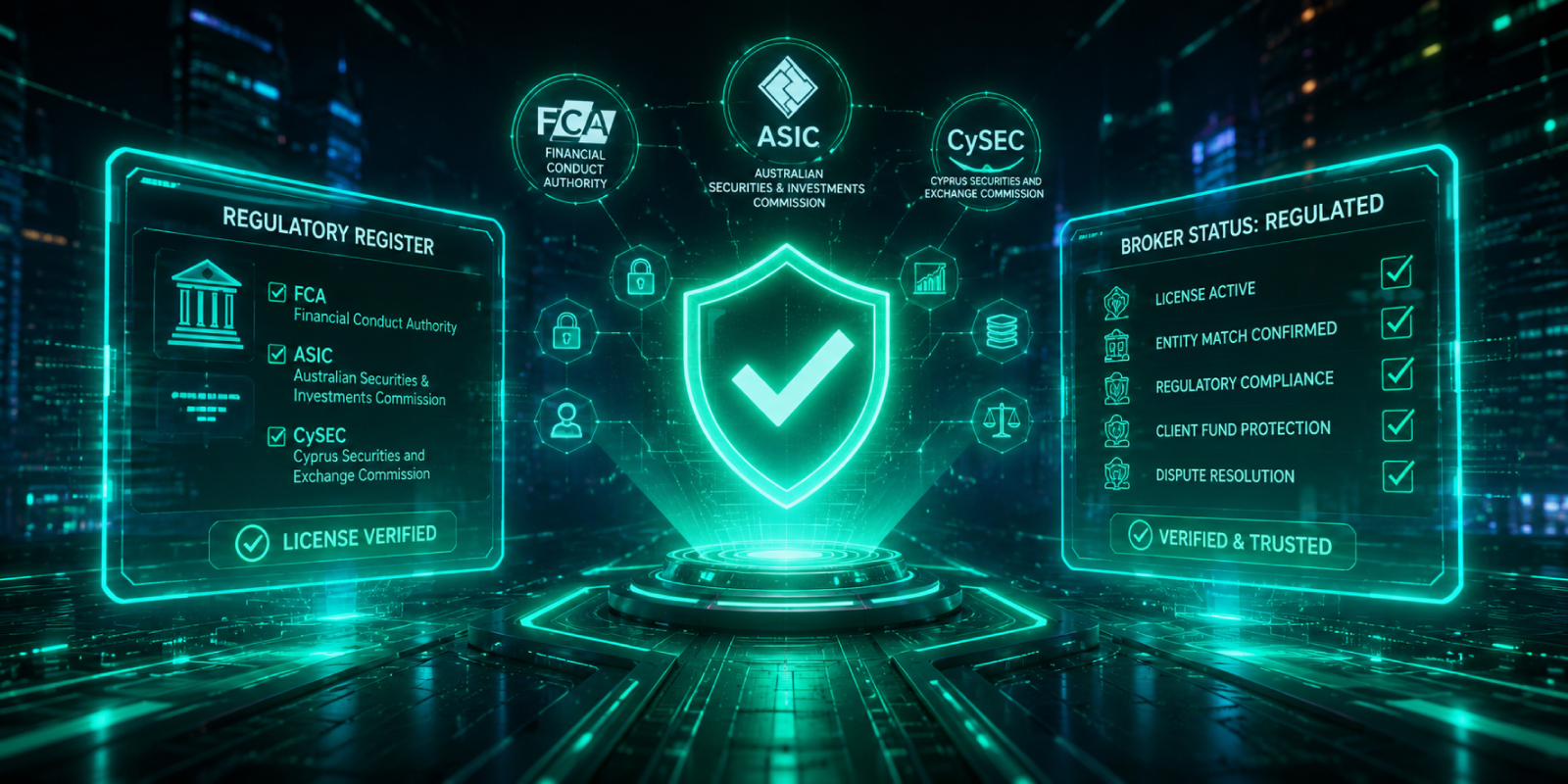
Broker Regulation Verification Checklist
-
Check the regulator's public register directly — Use the FCA's Financial Services Register, ASIC's Professional Registers, or CySEC's regulated entities list to confirm the broker's licence number independently.
-
Match the entity name exactly — Confirm that the regulated entity name on the register matches the legal entity you are opening an account with — not just a brand name or parent company.
-
Confirm the licence is active and unrestricted — Some brokers hold licences with conditions or restrictions. Review the full register entry, not just whether the licence exists.
-
Verify client fund segregation policy — Ask specifically whether your funds will be held in segregated accounts, and with which institutions — then verify this against the broker's published terms.
-
Review complaint and dispute history — Regulatory registers often include enforcement actions and warnings. A clean record over multiple years is a meaningful indicator of conduct quality.
Final Thoughts
Regulation as the Foundation of Every Trading Decision
Choosing a regulated forex broker is one of the most consequential decisions a trader makes — and one that compounds in importance over time. Every subsequent decision about strategy, risk, and capital is built on top of this foundational choice. A broker that operates within a robust regulatory framework provides not just protection, but a stable, transparent environment in which trading can develop with confidence.
Platforms like FISG continue to develop within regulatory frameworks that prioritise trader protection and market integrity. The commitment to compliance is not a constraint on the trading experience — it is what makes a professional trading experience possible .

Risk Disclaimer: Regulation improves the safety of the trading environment but does not remove the inherent risk of trading forex and CFDs. Losses can exceed your initial deposit. Always trade responsibly and within your financial means. Seek independent advice if necessary.
Found this article helpful?
Share it with your trading community
Related Articles
-
go to article
 Best CFD Broker 2026: What to Look for in a Modern Trading Platform
 -
go to article
 Top MT4 Broker: How to Choose the Right Platform
 -
go to article
 Segregated Client Funds Broker: What Every Trader Should Know